Picture this: someone collapses at your workplace. A colleague rushes to start chest compressions while another sprints to grab the AED mounted near the break room. But when the automated external defibrillator arrives, confusion sets in. Should compressions stop? Who applies the pads? How long should hands be off the chest? In real-life cardiac arrests, these moments of uncertainty can mean the difference between a coordinated rescue and dangerous chaos.
The truth is, CPR and AED use aren’t separate skills—they’re dance partners that must move together with precise timing. Too often, well-meaning rescuers pause compressions for extended periods while fumbling with electrode placement, or worse, everyone stands back waiting for the device to “take over” when continuous chest compressions remain critical. This article provides an overview of a team-oriented protocol that transforms panic into a practiced routine, ensuring every second counts when someone’s heart stops beating.
Whether you’re pursuing Heartsaver certification or BLS provider training through the American Heart Association in Cary, NC, understanding this complete cardiac emergency protocol elevates you from a certified individual to an effective team member.
The First Two Minutes of a Cardiac Emergency
0:00 – Initial Assessment
The moment someone collapses, approach quickly and assess responsiveness. If they don’t respond and aren’t breathing normally, immediately shout for help, designate someone specific to call 911, and send another person for the nearest AED.
0:15 – Begin Compressions
Don’t wait for the AED. Begin hard, fast compressions at 100-120 per minute, pushing at least two inches deep for adults. If trained in rescue breathing, deliver two breaths after every 30 compressions. If not, hands-only CPR works perfectly well—continuous compressions are the priority.
0:45 – AED Arrives
Here’s the critical choreography: the compressor keeps going without stopping. The AED operator powers on the device and applies the electrode pads. The compressor continues until the AED explicitly says “analyzing rhythm.”
1:15 – Analysis and Shock
Everyone must be completely clear during analysis. If a shock is advised, the AED operator ensures clearance and presses the button.
1:30+ – Resume CPR Immediately
Immediately after the shock (or if no shock is advised), resume chest compressions without delay. Don’t check for a pulse. Don’t wait. The AED will reanalyze every two minutes. Continue this pattern until EMS arrives.
These timing intervals represent ideal scenarios. Actual emergency response involves variables that proper training addresses—including when to deviate from the standard timeline and how to adapt when team members are unavailable.
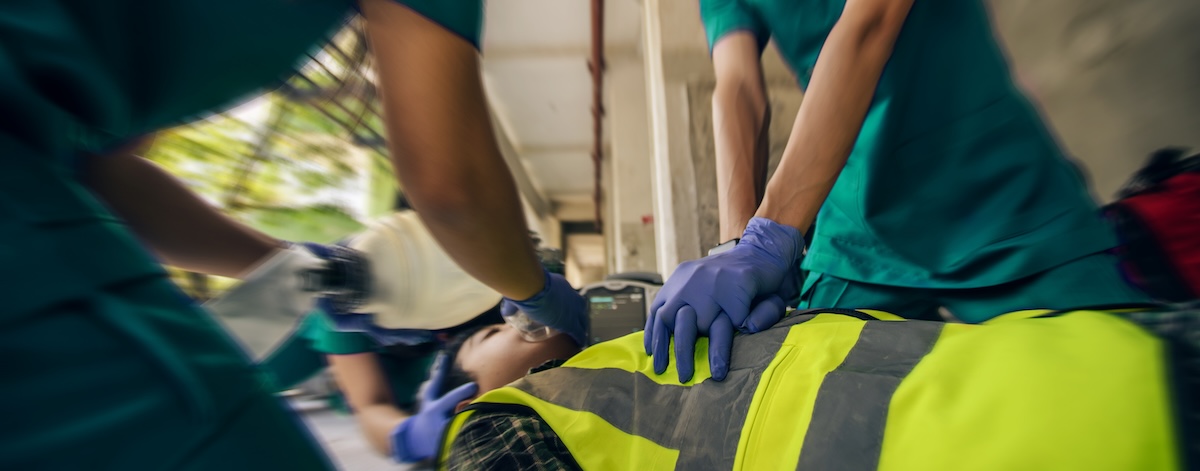
Emergency responders performing CPR on a patient during a cardiac arrest situation in Cary NC
CPR and AED Team Roles
The most effective cardiac arrest responses utilize a clear division of labor, but the nuances of role transitions require hands-on practice to master.
Person A – Primary Compressor
Begins chest compressions immediately and maintains quality technique. Should swap with Person B every two minutes—the switch should take less than five seconds.
Person B – AED Operator
Retrieves the AED, follows voice prompts, ensures pads attach firmly, and manages the shock button when advised. Can rotate in as a compressor after delivering shocks.
Person C – 911 Communicator
Stays on the line with dispatch throughout, providing updates and managing the scene.
Proper role coordination involves dozens of subtle decisions—like recognizing when a compressor is tiring before the two-minute mark, or knowing which team member should transition to which role. These judgment calls develop through scenario-based training, not article reading.
CPR and AED Response in Different Environments
Different environments create unique obstacles that require adapted protocols:
School Gymnasium – Managing crowds of children while accessing AEDs that may be located in offices or athletic entrances requires pre-planning and practice.
Swimming Pool Environment – Water and electricity demand specific safety protocols for removal, drying, and pad placement that go beyond standard techniques.
Retail or Office Space – Background noise, customer management, and unfamiliar AED locations create real-world complications.
Each environment presents decision points that aren’t obvious until you’ve practiced in context. Where exactly should bystanders stand? How do you maintain compression quality while kneeling on different floor surfaces? Who manages incoming questions from bystanders? These situational variables require hands-on scenario training.
What Happens When EMS Takes Over
When Cary paramedics arrive, they need specific information: approximate age, number of shocks delivered, when CPR started, and relevant medical history. Paramedics will typically ask the compressor to continue until they’re ready to assume care.
Occasionally, the patient will begin breathing normally during your care. If this occurs, stop compressions but keep AED pads attached. Position them in the recovery position if breathing but not fully conscious.
The handoff to EMS involves communication protocols and legal considerations that certification courses cover in detail—including documentation requirements and when to continue versus discontinue care.
CPR being performed with AED support illustrated by heart rhythm monitor showing cardiac arrest emergency
Practice Makes CPR and AED Response Automatic
Understanding the protocol isn’t the same as executing it under pressure. The choreography of cardiac emergency response—knowing who moves where, when to switch roles, how to maintain continuous compressions while integrating AED shocks—becomes automatic only through hands-on training.
Critical skills that require supervised practice include:
- Proper compression depth and rate (feedback devices reveal that most people compress too shallow)
- Seamless role transitions without extended pauses
- AED pad placement on varied body types
- Team communication under stress
- Recognizing and correcting common errors in real-time
Custom training scenarios that reflect your actual environment—your building layout, your available equipment, your team dynamics—transform generic knowledge into a specific, practiced response protocol.
Ready to move beyond reading to doing? Book your team training with Community EMTP in Cary. Because when seconds count, practiced routine beats theoretical knowledge every single time.