If you opened your bathroom cabinet right now, could it handle a deep cut? For most Cary families, the honest answer is no. That medicine cabinet holds expired bandages, hotel-sized antibiotic packets, and children’s Tylenol from three moves ago. When a real injury happens, like a kitchen accident or a backyard collision, the frantic drawer-rummaging begins.
The problem isn’t a lack of caring; it’s a lack of system. First-aid supplies arrive piecemeal and never get replenished. What you actually need is a properly stocked family first aid kit that is organized, easy to access, and ready for emergencies. And thanks to FEMA’s guidelines, you can assemble one this weekend without second-guessing every purchase.
Essential First Aid Kit Supplies Every Family Needs
Start with FEMA’s baseline recommendations from ready.gov then customize:
- Wound care: Adhesive bandages in multiple sizes, sterile gauze pads (4×4 inch minimum), roller gauze, medical tape, and butterfly closures for deeper cuts. Add triangular bandages for slings.
- Antiseptics and barriers: Antiseptic wipes, antibiotic ointment packets, and disposable nitrile gloves (medium and large). Include a CPR barrier mask with a one-way valve.
- Tools: Trauma shears (they cut through clothing and seatbelts—regular scissors won’t), tweezers with pointed tips, a digital thermometer, and safety pins.
- Temperature management: Instant cold packs and an emergency blanket.
- Medications: Non-aspirin pain reliever, anti-diarrheal medication, antihistamine, and hydrocortisone cream. Stick with tablets rather than liquids—they last longer and handle temperature changes better.
First Aid Kit Items for Children and Special Medical Needs
- Infant and child medications: Separate infant acetaminophen and ibuprofen (concentrations matter critically), plus children’s antihistamine.
- Respiratory and allergy: For asthmatic children, include spare spacers for inhalers. If anyone has prescribed epinephrine auto-injectors, store an unexpired backup in your home kit. Check expiration dates quarterly.
- Special medical needs: Glucose gel for diabetic family members, spare hearing-aid batteries, prescription information copies, and backup reading glasses.
Where to Store Your First Aid Kits at Home and in Your Vehicle
Placement determines whether your kit’s accessible when seconds count.
- Primary home kit: Store in a cool, dry location away from bathrooms; moisture damages packaging. A bedroom closet shelf or kitchen pantry works better than the medicine cabinet. Use a clear plastic container with a handle so you can carry it quickly.
- Label clearly: “FIRST AID – CHECK QUARTERLY” on all sides. Include a printed content list inside the lid.
- Vehicle kit: Assemble a duplicate for your car in a hard-sided case to survive summer heat. Skip temperature-sensitive medications. Add a reflective blanket, road flares, and work gloves.
- Go-bag integration: Your 72-hour emergency kit should include a streamlined first-aid module: trauma supplies, medications, and documentation copies.
How to Maintain Your Family First Aid Kit
The difference between a first-aid kit and a box of expired supplies is a system.
- Set calendar reminders: Quarterly checks (first day of each season) to verify medications haven’t expired, and supplies haven’t been depleted.
- Create a “use first” bin: When items approach expiration, move them to a separate container for daily use.
- Safe disposal: Wake County offers medication take-back locations throughout Cary. Never flush medications. There’s a drop box at CVS on Cary Parkway and Walgreens on Maynard Road.
- Documentation: Keep a simple spreadsheet or phone note with purchase and expiration dates. When you use an item, note it immediately.
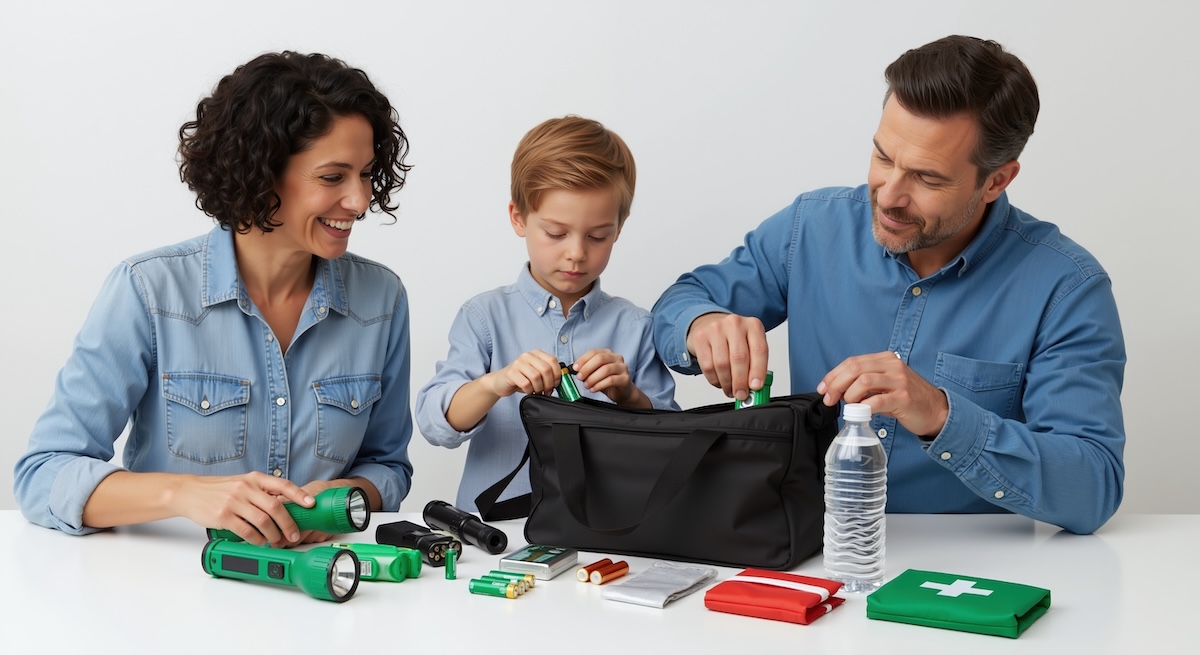
Family preparing emergency kit with survival supplies. Parents and son packing bag with flashlights, batteries, and first aid kit. Disaster readiness and safety concept
Why First Aid Training Matters
The most sophisticated kit fails if you don’t know how to use it. Start with basics:
Practice pulling on gloves quickly without tearing them. Open your CPR barrier mask and practice placing it correctly. Watch videos on applying roller gauze with adequate pressure.
For comprehensive skill-building, proper first aid training in Cary, NC provides hands-on practice with real scenarios to give you the confidence to respond to injuries while waiting for emergency responders. Our First Aid and CPR certification classes provide hands-on instruction using the same supplies you’ll keep in your kit.
Build Your First Aid Kit This Weekend
Download a checklist: Use FEMA’s official list at ready.gov/kit, then add household-specific items.
- Shop in one trip: Most supplies are available at Target, CVS, or Walgreens. Budget $60-80 for a home kit, $30-40 for a vehicle kit.
- Organize immediately: Unpack, label, date, and store properly before the weekend ends.
- Schedule your first check: Set a phone reminder for three months out.
- Book training: A well-stocked kit multiplies in value when paired with knowledge. Enroll in a First Aid and CPR class this month.
Your family’s safety shouldn’t depend on what happens to be in the junk drawer. With a properly built, regularly maintained first-aid kit, you’re prepared for everything from everyday accidents to genuine emergencies. Start this weekend, because the middle of a crisis is too late to wonder if you have enough gauze.
Download our printable first-aid kit checklist and find upcoming CPR certification classes in Cary at CommunityEMTP.com