Ethan Clarke is a North Carolina–based meteorologist and emergency management professional known for combining accurate weather forecasting with practical preparedness outreach. His passion for weather began in childhood after experiencing major snowstorms, hurricanes, and the 2011 Raleigh tornado outbreak. By middle school, he was already creating and sharing forecasts through email, which later evolved into a strong social media presence with over half a million Facebook followers and a rapidly growing Instagram audience.
Currently completing his bachelor’s degree in Environmental Science with a concentration in Natural Disasters, Meteorology, and Climate Change, Ethan balances his academic work with his role in Raleigh’s Emergency Management department. He has collaborated with the Governor’s Office, NC Highway Patrol, and other agencies on hurricane preparedness campaigns, including a video with Governor Stein to promote seasonal awareness.
Ethan’s approach focuses on clear, timely, and localized communication. He emphasizes the importance of year-round readiness, especially countering public complacency in late hurricane season. His work often highlights small towns and underserved communities, ensuring their recovery stories remain visible long after disasters fade from headlines.
Looking ahead, Ethan plans to expand his work through consulting, private forecasting for events, and continued public education efforts—bridging meteorology and emergency management to strengthen community resilience across North Carolina.
In this interview, meteorologist and emergency management professional Ethan Clarke shares how he blends accurate forecasting with practical preparedness to keep North Carolina communities safe year-round.
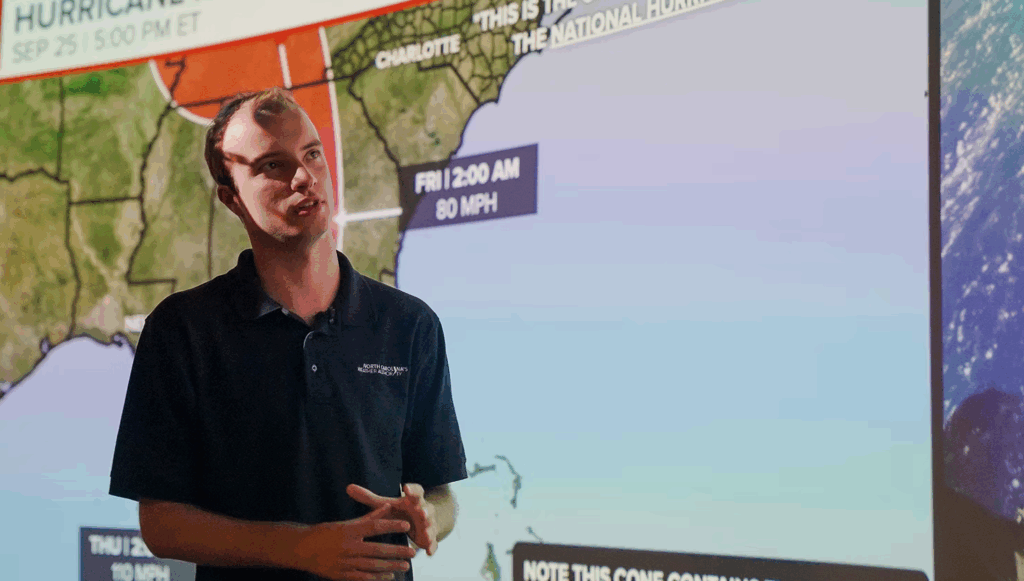
Ethan Clark, Owner and Founder of North Carolina’s Weather
From Childhood Curiosity to Statewide Impact: How Ethan Clark Became North Carolina’s Trusted Weather Voice
Raleigh, N.C. — What began as a third grader’s fascination with snowstorms has grown into a statewide platform for emergency preparedness. Ethan Clark, a rising meteorologist and emergency management professional, has built a reputation as one of North Carolina’s most trusted independent weather communicators. His blend of science, accessibility, and community outreach has turned social media updates into life-saving tools.
Early Sparks of Curiosity
Clark traces his passion back to a 2009 Christmas snowstorm that left him asking questions few his age considered: how did it happen? With limited technology at his disposal, he sought answers the old-fashioned way, checking out weather books from his school library. By middle school, he was emailing forecasts to friends and family. A tornado outbreak in Raleigh in April 2011 cemented his desire to track and explain severe weather events.
Education Built for Disasters
Now in the final stretch of completing his bachelor’s degree, Clark has shaped his academic path around natural disasters and climate science. His concentration combines meteorology, emergency management, and environmental science, a program he admits he “designed to be exactly what I wanted, just in a fancy way.” His coursework, from hurricane forecasting to climate change models, mirrors the crises his state routinely faces.
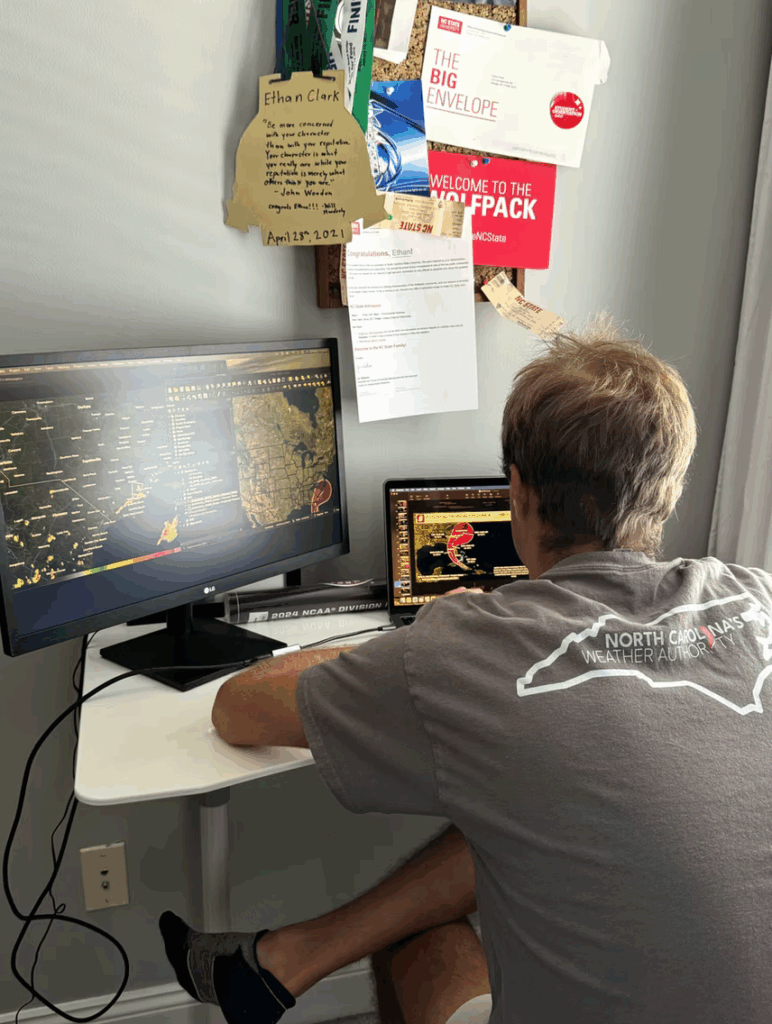
Ethan Clark, tracking storm at home.
Collaborating at the Highest Levels
Clark’s expertise has already caught the attention of top officials. This year, he filmed a hurricane preparedness video with Governor Roy Cooper’s office, reinforcing the importance of late-season awareness when many residents have tuned out. He’s also participated in hurricane forums with state climatologists and emergency managers, helping bridge communication between local communities and state leaders.
Forecasting in the Age of AI
While traditional forecasting models remain his go-to tools, Clark is watching carefully as artificial intelligence enters the field. Some AI-driven models, he notes, have already predicted hurricanes that never materialized. “A model is only as good as the data you put into it,” he said, cautioning against overreliance on untested systems.
Building a Digital Lifeline
Clark’s weather updates reach hundreds of thousands across Facebook and Instagram. His posts are known for depth, often going beyond graphics to deliver full explanations people can trust. That approach has earned him credibility with residents who have told him his warnings convinced them to evacuate before storms destroyed their homes. “It’s eye-opening to realize something I said changed someone’s decision, and saved their family,” Clark reflected.
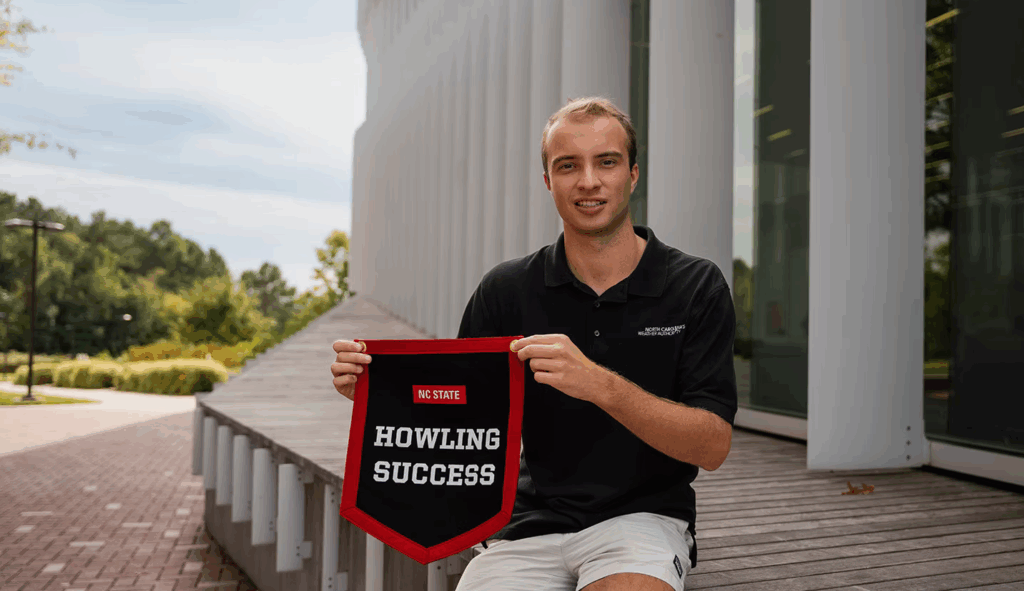
Ethan Clarke, recognized by NC State The Division of Academic and Student Affairs’ Howling Success.
Advocating for Preparedness
Beyond the data, Clark’s mission is simple: get people ready. His top piece of advice? Stockpile water. “If you have clean water, you’re going to get by a lot better than not having it,” he said, underscoring that even in urban areas, basic infrastructure can fail after storms. He also urges residents to avoid complacency as fall approaches, when some of North Carolina’s worst hurricanes have historically struck.
Looking Ahead
Clark isn’t slowing down. While continuing to run his fast-growing weather platform, he’s exploring consulting opportunities that blend meteorology and emergency management. He’s also launching an LLC to formalize his work — part protection, part preparation for a career built on public trust.
“I think we’re better when we’re all together, not separated,” he said. “My goal is to keep building those connections between residents, local leaders, and state agencies, because when the next big storm comes, that’s what will save lives.”
North Carolina’s Weather Authority

North Carolina’s Weather Authority was created by Ethan Clark when he was in 7th grade. Driven by a passion and immense interest in weather, he saw this as a great opportunity to learn more about weather and serve the people of North Carolina. Since its creation in 2016, North Carolina’s Weather Authority has built a large following and is quickly approaching 745,000 followers from all 100 counties in North Carolina!